

Regional One Health’s maternal fetal medicine team recently earned accreditation from the American Association of Ultrasound Medicine (AIUM) in obstetric standard, detailed second trimester, and fetal echocardiography ultrasound.
They are the only team in the region will all three accreditations, which highlights their adherence to vigorous quality standards.
For patients, that means doctors can deliver the most accurate diagnosis and optimal treatment plan for both the expectant mom and her baby.
When an expectant mom learns there are complications with her pregnancy, it’s stressful. In order to provide reassurance and achieve an optimal outcome, her care team needs to reach an accurate diagnosis and develop a clear treatment plan.
Regional One Health is using elite expertise to make that happen.
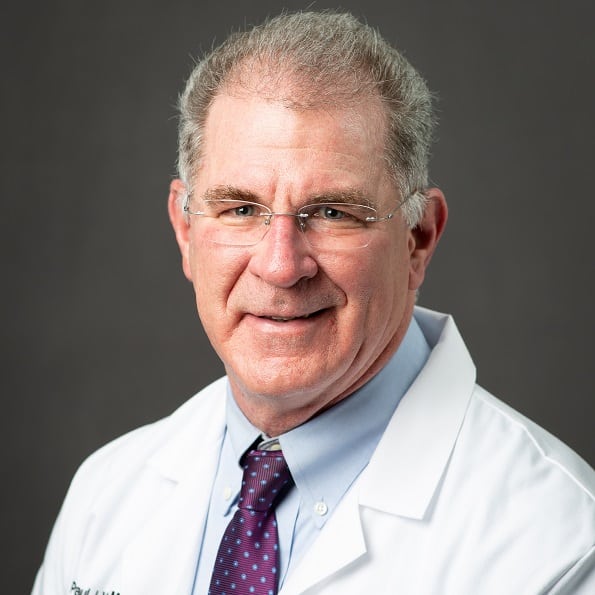
“Ultrasound is the lifeblood of our program,” said Paul Wendel, MD, a maternal fetal medicine physician and medical director for high-risk obstetrics. “It’s hard to get even one of these accreditations, and our team earned all three. It lets you know you’re getting the best quality because it’s being measured by independent, third-party standards.”
The maternal fetal medicine ultrasound team is the only group of sonographers in the region with American Association of Ultrasound Medicine (AIUM) accreditation in three types of scans: obstetric standard, detailed second trimester obstetric, and fetal echocardiography ultrasound.
“Ultrasound is the lifeblood of our program,” said Paul Wendel, MD, a maternal fetal medicine physician and medical director for high-risk obstetrics. “It’s hard to get even one of these accreditations, and our team earned all three. It lets you know you’re getting the best quality because it’s being measured by independent, third-party standards.”
Kelsi McConnell, maternal fetal medicine practice manager, said that helps the team deliver exceptional care for every patient. “The accreditation process is very thorough, and it ensures every patient’s scan is being done based on the same precise standards,” she said. “It’s a lot of work, and that’s driven by our team – it’s something they want to accomplish and maintain.”
During a high-risk pregnancy, ultrasound scans are essential for diagnosis, treatment planning, and monitoring.
Obstetric standard ultrasound checks for fetal development, congenital anomalies, and gestational age; while detailed second trimester ultrasound evaluates the baby’s growth and organs and monitors the mom’s placenta and amniotic fluid.
Fetal echocardiography is a specialized ultrasound of a baby’s heart prior to birth. These scans are typically done if a routine ultrasound detected potential problems or if the mom has risk factors such as diabetes, lupus, or a family history of heart issues.
For Dr. Wendel, they are essential tools in planning and delivering care.
“Accreditation means I have the most reliable information so I can design the best possible treatment and monitoring plan,” he said. “That accuracy helps prevent misdiagnosis, which means the patient isn’t hearing different things throughout her pregnancy. She has a precise diagnosis and a clear plan.”
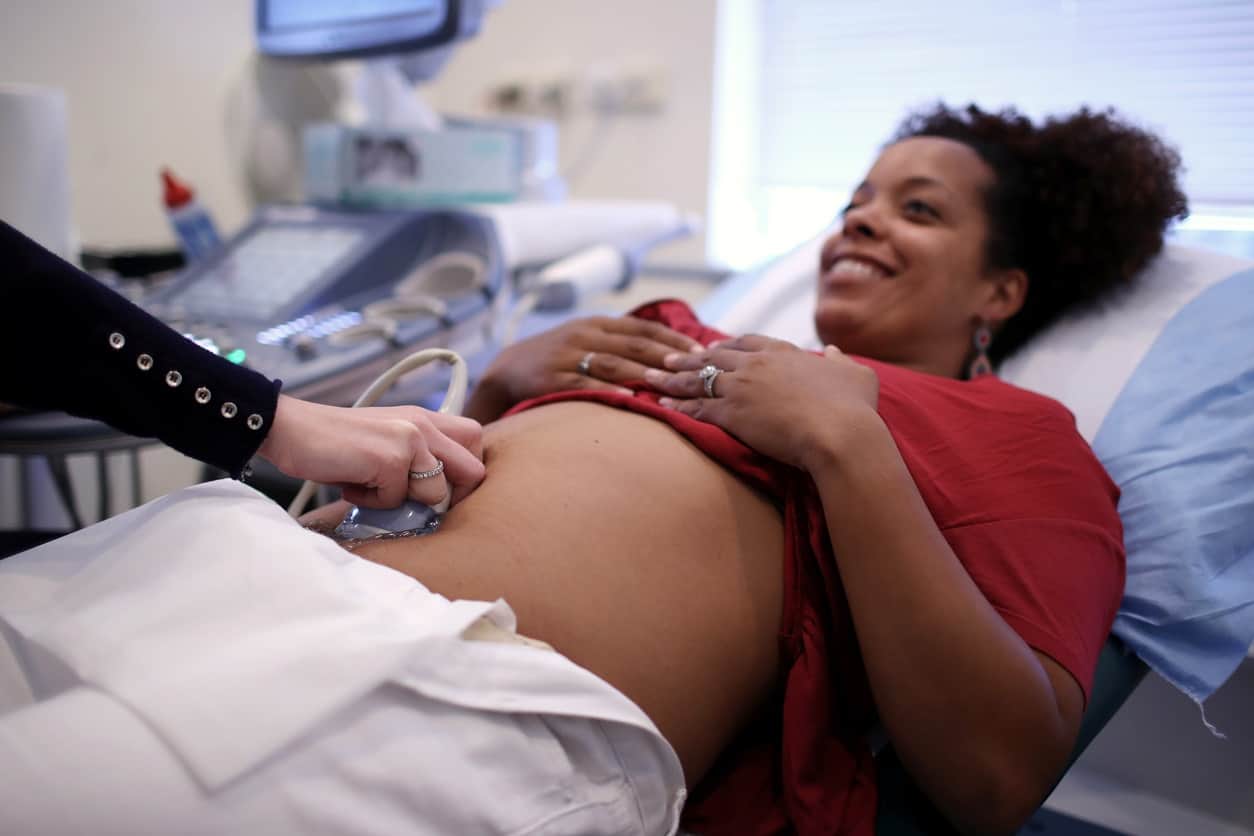
Regional One Health’s maternal fetal medicine ultrasound team is the only group of sonographers in the region with American Association of Ultrasound Medicine (AIUM) accreditation in three types of scans: obstetric standard, detailed second trimester obstetric, and fetal echocardiography ultrasound.
Dr. Wendel can also bring in the specialists the baby needs well before birth. Regional One Health partners with Le Bonheur Children’s Hospital to ensure patients have seamless access to neonatal specialists such as cardiologists, neurologists, gastroenterologists, and more.
During the patient’s pregnancy, the physicians convene for “Fetal Boards,” multidisciplinary conferences held to discuss the best care for mom and baby. When the mom gives birth at Regional One Health, those specialists are on hand to care for her and her baby.
“These accurate, precise ultrasound scans help us coordinate care for the baby during that ‘golden hour,’ which is the first hour after delivery,” Dr. Wendel explained. “We make sure the baby has immediate intervention, which leads to better outcomes.”
The ability to enhance care makes it worth the rigorous process involved in accreditation.
Accreditation involves submitting numerous examples of different types of ultrasound exams to AUIM. AUIM then reviews the exams based on rigorous quality and safety criteria to ensure they meet their standards.
“It shows that we operate under the established protocol for every patient,” McConnell said. “By following these standards, we’re providing the most detail and clarity, and we’re ensuring the exam we do for each patient is the same and that we’re doing it right every time.”
It also requires a great deal of continuing education for sonographers, which means the team is up to date on the latest information and improvements in the field, McConnell added.
Very few organizations achieve all three accreditations. Dr. Wendel said it is especially unusual to find accredited fetal echocardiography ultrasound teams outside of a children’s hospital. By offering all three accredited scans, Regional One Health ensures patients don’t have to travel to a separate facility to get the care they need.

“These accurate, precise ultrasound scans help us coordinate care for the baby during that ‘golden hour,’ which is the first hour after delivery,” Dr. Wendel explained. “We make sure the baby has immediate intervention, which leads to better outcomes.”
Dr. Wendel noted accreditation also helps Regional One Health recruit the best doctors, nurses, and sonographers to its high-risk pregnancy team. That is especially important as the hospital prepares to build a new state-of-the-art campus to serve Mid-South patients.
“It’s part of the foundation for a very bright future. We’re doing this now in anticipation of the growth of this program and the movement to the new building,” he said.
“This unit is really about the people, and we have people who love what they do,” Dr. Wendel added. “They’re helping us build a first-rate high-risk pregnancy service to serve our region.”