

Regional One Health is home to expert surgeons and the most advanced robotic surgery technology in Memphis – and it’s making a big difference for our patients.
Dr. John Schorge, chief of Regional One Health’s OB/GYN service, recently discussed how advances in robotic surgery are allowing more patients to have minimally invasive procedures for everything from hernia repair to cancer to fibroids.
He said minimally invasive procedures involve fewer complications, less pain, and an easier recovery.
Over the past quarter of a century, advances in technology have revolutionized minimally invasive surgery – and Regional One Health is dedicated to making this the preferred option for more patients in Memphis and the surrounding area.
John Schorge, MD, FACS, chief of the OB/GYN service at Regional One Health, held a “Lunch & Learn” to discuss Regional One Health’s robotic surgery program, which uses the most advanced technology available to treat everything from uterine fibroids to hernias to cancer.
“Minimally invasive surgery has excellent outcomes and a lot of advantages for patients,” Dr. Schorge said. “We can operate through tiny ‘Band-aid’ incisions, which means fewer complications and less scarring. The vast majority of patients go home the same day, and they recover faster with less pain and less pain medication.”
As a specialist in gynecologic oncology and complex gynecologic surgery, Dr. Schorge sees those kinds of results frequently with the patients he treats. Regional One Health also offers robotic procedures for colorectal, urologic, vascular, oncology, and general surgery.
That means patients can have a variety of procedures with just tiny incisions, rather than as traditional or open surgery.
As recently as 25 years ago, common procedures like hysterectomy were open surgeries that left a large scar and required several nights in the hospital, Dr. Schorge noted.
That started to change in the early 2000s with the advent of laparoscopic surgery, in which surgeons make tiny incisions and operate by inserting their instruments through narrow tubes. However, due to limited range of motion and long operating times, laparoscopic surgery wasn’t ideal for complex procedures, and doctors couldn’t operate on patients with contraindications like obesity and previous abdominal surgeries.

“Minimally invasive surgery has excellent outcomes and a lot of advantages for patients,” Dr. John Schorge said. “The vast majority of patients go home the same day, and they recover faster with less pain and less pain medication.”
Robotic surgery helped change that.
In robotic procedures, surgeons use a console with arms that can be fitted with various instruments. The robot’s arms replicate the motion of the human body, while the system provides better visualization, precision, and control.
“With the robotic platform, you can do a variety of complex procedures because you have extra arms – almost like you are a human octopus,” Dr. Schorge said.
Regional One Health has embraced the technology so doctors can offer more patients a chance at minimally invasive surgery. It is the only hospital in Memphis with the Da Vinci 5 robotic surgery system, which is the newest technology available and has a number of advantages over previous versions.
“In 2022, the robotic surgery program at Regional One Health was limited. There was just one system, so it was challenging to schedule cases due to the demand,” Dr. Schorge said. “The hospital acquired three additional platforms, and it felt like almost overnight we had the option to offer this to more patients.”
It is paying off for both patients and physicians.
Dr. Schorge said robotic surgery and traditional laparoscopic surgery are both highly effective for many conditions.
In his practice, he has seen patients with deep ovarian lesions from endometriosis and extremely large uterine fibroids go home the same or next day and get back to normal quickly thanks to robotic surgery. Expanded access to the dV5 platforms has allowed four other gynecologic surgeons to offer this for the first time in their practices at Regional One Health. Together with Dr. Schorge, they have helped increase the OB/GYN department’s rate of minimally invasive hysterectomies to over 90 percent, which is well above the national average.
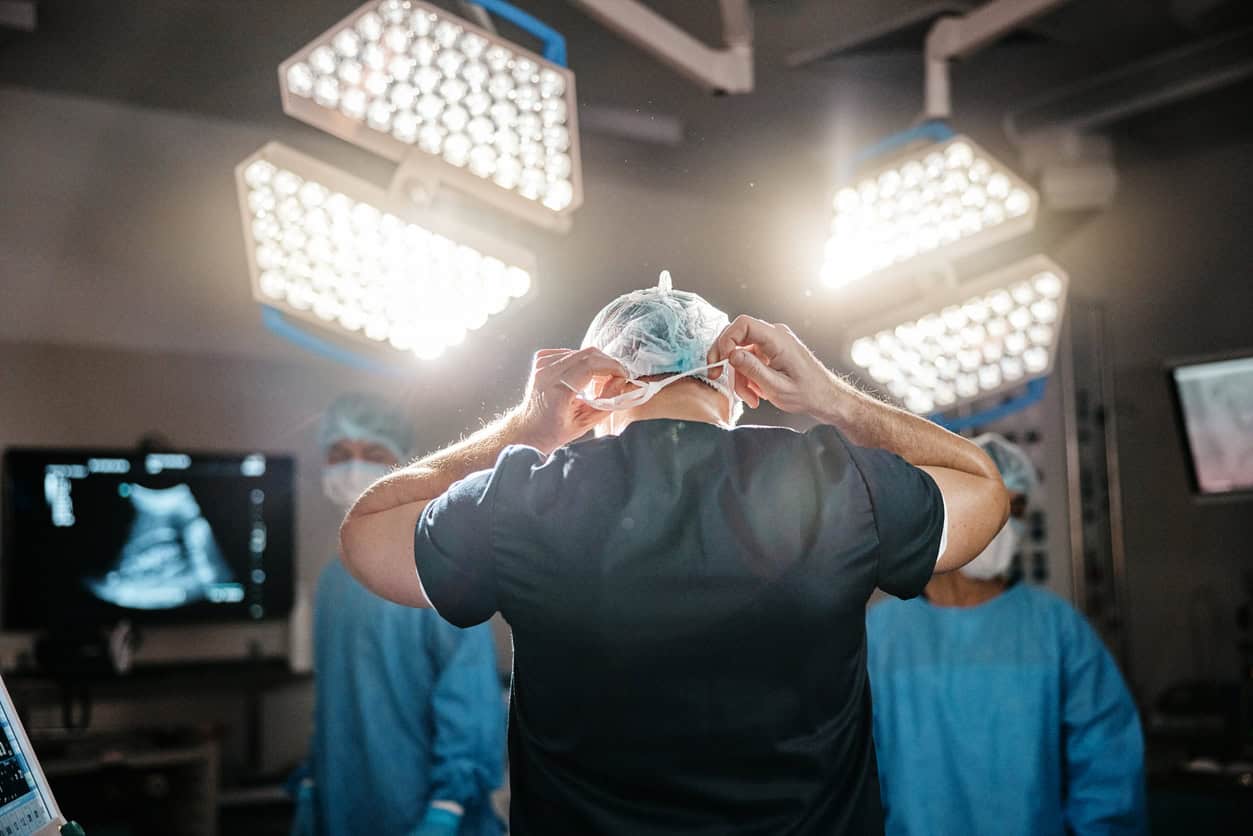
Regional One Health is the only hospital in the city with the Da Vinci 5 robot, which is the most advanced platform available. This allows for more minimally invasive procedures, even for patients with very complex conditions.
He noted the Da Vinci system also has benefits for providers. It puts less pressure on the arm joints, making it safer and more comfortable to spend long days in the operating room.
Dr. Schorge said a surgeon he worked with at another hospital ended up needing elbow and shoulder surgery due to the repetitive motion associated with traditional laparoscopic surgery. “The Da Vinci system is very comfortable, and there’s no force on the joints, so it can extend your career,” he noted.
Da Vinci also includes a training module that offers opportunities for hands-on teaching with residents, he said. That helps Regional One Health train more residents and fellows in robotic surgery so more providers will be available in the future.