

Providing patients with information about breast cancer is key to early detection and early treatment.
Dr. Ashley Hendrix, a breast surgical oncologist with Regional One Health Cancer Care, is addressing some of the most common questions she hears from patients.
Dr. Hendrix encourages patients to learn about risk factors and symptoms so they can take charge of their breast health.
Breast cancer awareness is contributing to more early detection and a higher survival rate.
However, patients still have questions. Ashley Hendrix, MD, MBA, FACS, breast surgical oncologist with Regional One Health Cancer Care, is providing the answers so they can manage their risk and get the screening and treatment they need.
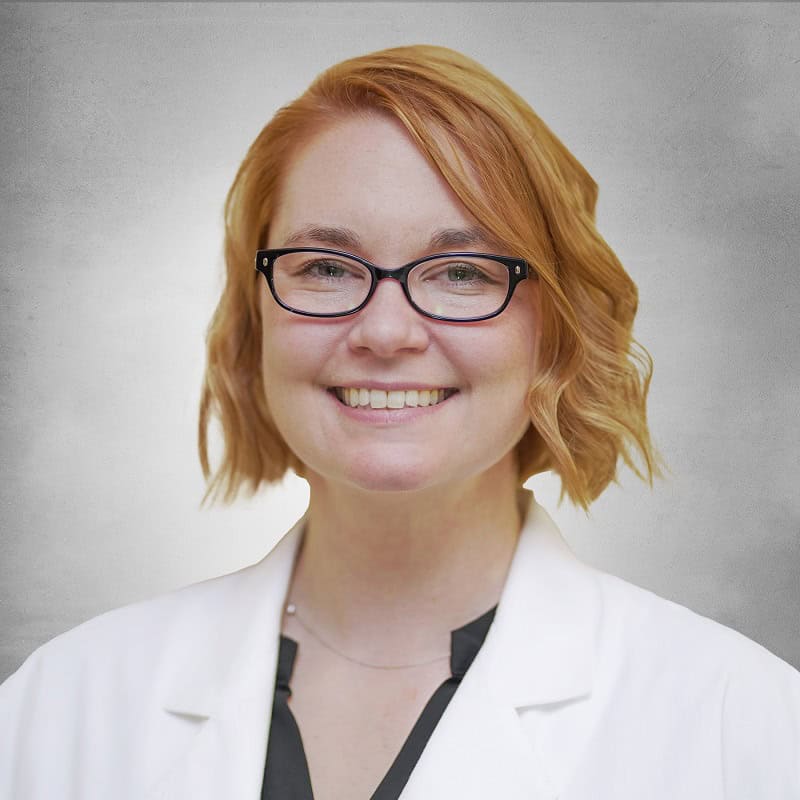
“Breast cancer is a diagnosis that affects so many people,” Dr. Ashley Hendrix says. “The more you know about your risk and how to manage it, the more you can do to take charge of your health.”
“Breast cancer is a diagnosis that affects so many people,” she said. “The more you know about your risk and how to manage it, the more you can do to take charge of your health.”
What increases risk of breast cancer (and what doesn’t)?
“A lot of it comes down to hormone exposure and how that affects your breasts,” Dr. Hendrix said. “For patients with a family history of certain types of cancer, genetics play a role.”
Exposure to hormones like estrogen and progesterone can trigger cell division, increasing the chances for tumors to form and grow. Early menstruation, late menopause, not having children or having children later in life, and other factors that increase exposure to hormones are linked to a higher breast cancer risk.
Genetically, a strong family history of breast cancer or pancreatic, prostate, uterine and ovarian cancers also increase risk.
Dr. Hendrix said other risk factors include aging, being female, inactivity, obesity, a diet high in red meat, and excess alcohol consumption. “We can’t impact all of these, but if there’s something we can impact, we should,” she said.
What doesn’t increase your risk of breast cancer? “One of the most common myths is that mammograms cause cancer. This is not true,” Dr. Hendrix said. “Deodorant and underwire bras also do not cause breast cancer.”
What if I don’t have risk factors but notice symptoms?
Dr. Hendrix cautioned patients not to be complacent if they don’t have classic risk factors.
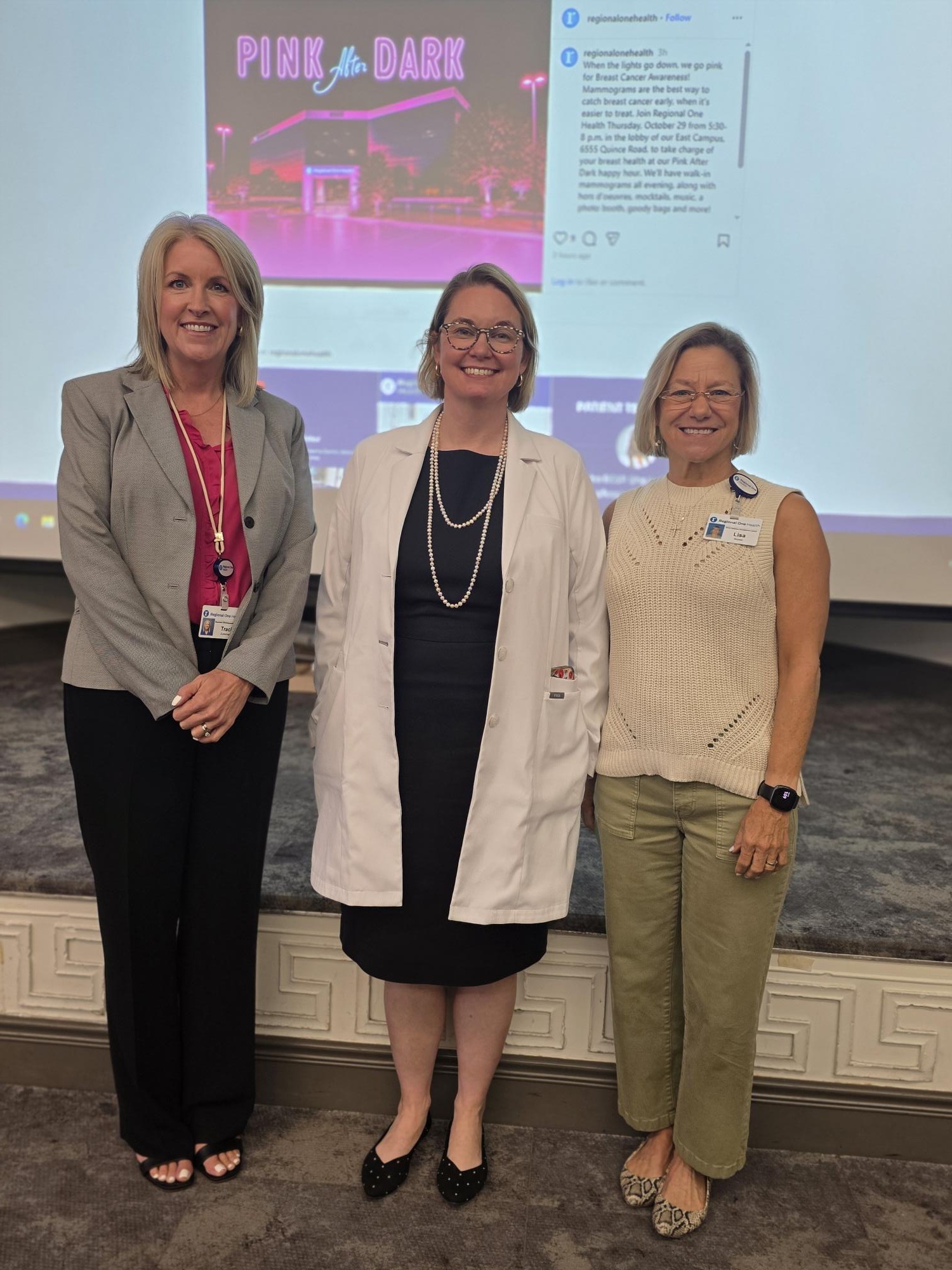
Dr. Ashley Hendrix recently hosted a “Lunch & Learn” to educate patients about breast cancer risk factors, symptoms, screening, and treatment options.
Some women say they’re “too young” and have no family history of breast cancer. However, about 10 percent of breast cancer diagnoses are in women under age 45, and many patients do not have a family history of the disease.
Men are also not immune. While breast cancer in men is less common, there were about 3,000 new diagnoses in 2026.
Dr. Hendrix encourages patients to talk to their provider about their screening needs and be alert to changes in their breasts.
Symptoms include masses or lumps, thickening, red or scaly nipples, skin changes, swelling, inverted nipple, discharge especially if it’s bloody, and persistent pain.
“If you notice changes in your breasts or symptoms, talk to your healthcare provider, even if you’re young, male, or have no family history,” Dr. Hendrix said.
What happens during a mammogram?
All average risk women should have an annual screening mammogram starting at age 40, Dr. Hendrix said. High-risk patients should talk to their provider about supplemental options with screening.
A routine screening mammogram takes about five minutes. Each breast is compressed between two plates and the technician takes two images of each breast.
Regional One Health offers the latest in 3D mammogram technology, and all images are read by breast radiologists.
Dr. Hendrix noted new technology has made mammograms more accurate.
She added if you find a mammogram uncomfortable, taking ibuprofen or aspirin ahead of time can help.
My mammogram report says I have dense breasts – what does that mean?
Patients with dense breasts are at higher risk of breast cancer. For one thing, dense breast tissue makes it harder to see cancer on the mammogram. Along with that, “It isn’t just important to know that a patient has dense breast tissue, you need to think about why,” Dr. Hendrix said.
Mammograms are the best way to detect breast cancer early, when it is easier to treat. All average-risk women should have an annual screening mammogram starting at age 40.
Younger women typically have denser breast tissue because their body is producing estrogen, she explained. However, after menopause, falling estrogen levels should mean more breast tissue converts to fat, which makes it less dense.
“If you still have dense tissue in your 70s, you may need additional screening,” Dr. Hendrix said.
What if my mammogram is abnormal?
Dr. Hendrix said about 1 in 10 mammograms is abnormal, and patients are called back for more imaging. The good news is, fewer than 10 percent of those patients have cancer.
A mammogram can be abnormal for a number of reasons, Dr. Hendrix said: an unclear picture, a missed area, or a non-cancerous tumor or cyst.
Typically, after an abnormal screening mammogram, you’ll have a diagnostic mammogram, which takes additional images of the area of concern. Some patients have a breast ultrasound, which can differentiate between a harmless fluid-filled cyst and a more concerning solid tumor. Other patients may need a breast MRI.
If those tests still come back as suspicious, patients typically need a biopsy. A biopsy is the only way to determine if a mass is cancerous.
What happens if I’m diagnosed with cancer?
Dr. Hendrix said breast cancer treatment continues to improve. Currently, patients with stage 1 breast cancer, which is only in the breast and has not spread to the lymph nodes, have over a 99 percent survival rate at five years.
Each patient has a personalized treatment plan, she said.
Most patients have surgery. A lumpectomy removes the tumor and surrounding tissue, while a mastectomy is removal of the breast and in some cases the lymph nodes.
Dr. Hendrix said some patients also require radiation or systemic treatment such as hormone therapy, chemotherapy, or immunotherapy.