

The Access Incubator at Regional One Health’s Center for Innovation helps healthcare startups assess their innovations in a real-world environment at the hospital.
For Dr. Eunice Yang and OK2StandUP, which developed AI-driven fall prevention technology, it was a valuable opportunity to learn and improve.
OK2StandUP is using what it learned to refine its technology in hopes of making it easy for providers to use and helping hospital systems protect patients from falls.
After OK2StandUP Founder & CEO Eunice Yang, PhD successfully tested her company’s fall-prevention technology in nursing homes, she wanted to determine if the system could be used in a hospital setting.
To answer that question, she turned to the Access Incubator at Regional One Health’s Center for Innovation.
The Access Incubator helps healthcare startups assess innovations in a real-world environment by working with Regional One Health employees, physicians, processes, and business partners. The goal is to validate whether the product or service is feasible, viable, and desirable in today’s health care environment.

Nurses can use OK2StandUP’s AI-based technology from their nursing station to know if a patient might be trying to get out of bed. Then, they can intervene to prevent afall.
OK2StandUP wanted to identify what worked and what needed further development, and Dr. Yang said the insight she gained can be described in one word: “Tremendous.”
“Regional One Health is very agile – it’s agile in terms of implementation, it’s agile in terms of getting the people we needed to talk to quickly, it’s agile in pivoting when we needed to,” she said. “That agility is huge for a startup that is trying to evaluate whether their product can work in the hospital setting.”
OK2StandUP developed AI-driven technology aimed at preventing falls among high-risk patients. Patients wear a sensor that detects motion and sends data to OK2StandUP’s machine-based learning model to predict when a patient has intentions of getting up. That triggers an alert to care providers so they can respond and assist the patient.
In nursing home trials, it achieved zero falls in 4,500 hours of monitoring and a 95 percent specificity and sensitivity rate, meaning it was correct 95 times out of 100 that a patient was attempting to get up.
OK2StandUP started working with the Access Incubator to evaluate its technology in several units at Regional One Health.
In 2025 and 2026, the technology was evaluated by tracking get-up events on 15 patients in the hospital’s step-down and telemetry units, with the help and contribution of nurse managers, nurses, and assistants.
Patients wore a chest-worn activity monitor, and nurses were notified through a mobile app when the system identified a bed transition. OK2StandUP’s technology was used in conjunction with existing hospital fall-prevention protocols as the primary standard of care. Consistent with OK2StandUP’s experience of low fall rates in nursing homes, after 2,365 hours of patient monitoring no falls were observed among the patients monitored during this evaluation.

OK2StandUP Founder & CEO Eunice Yang, PhD sums up her experience with the Center for Innovation in one word: “Tremendous!”
Dr. Yang said one thing OK2StandUP learned was that patient activity information delivered to nurses needed to better fit into their workflow. “This is so evident in literature, but when it comes to designing it, that’s the challenge,” she said. “The Access Incubator helped with this.”
Dr. Yang said her greatest takeaway from the evaluation was uncovering the hidden layers of OK2StandUP that could block adoption and scalability.
“I learned that scalability does not begin with integration into an EHR or nurse call system. It begins with usability and the ability to fit into existing workflows. It begins with the minutia of things that makes the day-to-day grind of nurses lives simpler long before those larger integrations are in place,” she said.
“In trying to scale the technology into hospitals, the question isn’t just whether it’s usable,” Dr. Yang continued. “It’s critical to understand if it integrates into the existing workflow at hospitals of any size, regardless of their EHRs or nurse communication platforms, and to identify when and where there are bottlenecks.”
She noted nurses in a hospital setting have many critical tasks, so OK2StandUP couldn’t have too many steps. They introduced auto-pairing, allowing the device to pair to a patient’s room in one or two steps within a minute or two; and made it so nurses can pair the device right from their desk without even having to go into the room.
OK2StandUP also improved how alerts are delivered when a patient is attempting to get up.
“We moved to a large display near the nursing station,” Dr. Yang said. “It gives the status of each patient and turns red if the patient has intentions of ambulating on their own. It’s easier to see and recognize so the nurses can deliver care proactively.
After addressing those bottlenecks, Dr. Yang is ready to move onto the second phase of her evaluation with the Access Incubator.
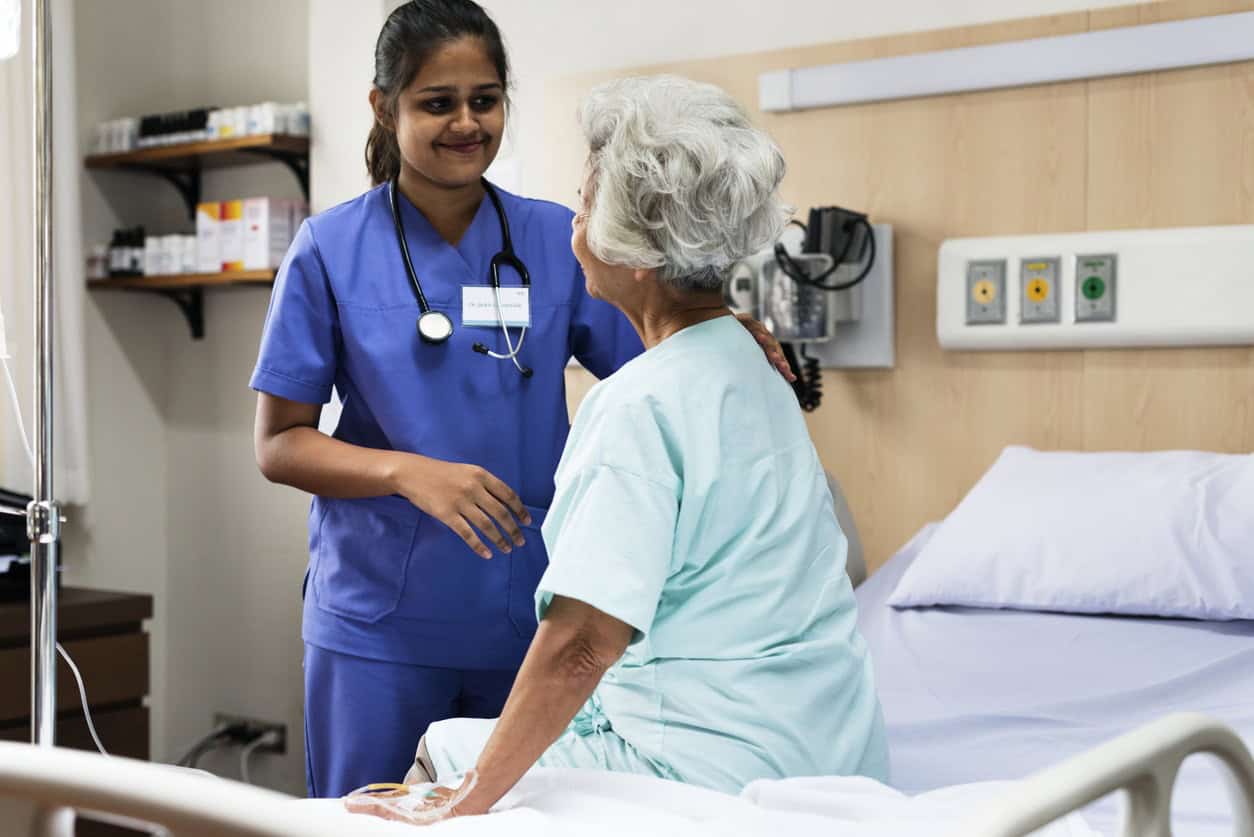
Preventing falls is a big priority at Regional One Health and other hospitals. By testing their technology in a real-world setting, OK2StandUP is able to make improvements.
“Identifying these challenges was critical. I’m really excited to see the redesigned system implemented in the Trauma Acute Unit in September 2026,” she said. “This is when we will evaluate whether the heads-up display is easy to see and understand, whether the activity reports are useful during huddles, and whether both tools fit naturally into frontline workflow. I’m also looking forward to getting nurses’ feedback on how we can continue to make their daily lives easier so they can dedicate time to what they love to do.”
Dr. Yang said the Access Incubator played an essential role in getting OK2StandUP to this point. “The obstacle that surfaced wouldn’t have surfaced if we hadn’t participated in the Access Incubator,” she said. “The feedback we received was critical to improving the technology.”
She added working with the Center for Innovation also gave her valuable insight on hospital budgeting, infrastructure, technology, clinical units, and more. She said those lessons will be useful as OK2StandUP works on scaling its technology to serve hospitals of all types and sizes: “We want to create a solution that can be adopted regardless of a healthcare system’s size.”
Dr. Yang looks forward to exploring those questions with the support of a team she has come to view not only as professional colleagues, but friends.
“The innovation group, the nurses, the managers – they’re just wonderful people!” she said. “The culture is evident at Regional One Health. They love what they do, and that’s important, because healthcare isn’t just about technology – it’s about people.”
Visit ok2standup.com for more about OK2StandUP.
Visit innovation.regionalonehealth.org for more about the Center for Innovation and Access Incubator program.