

Essential Tremor can cause severe hand tremors that make it difficult or impossible to write, eat, and do daily self-care activities.
If you’re experiencing hand tremors from Essential Tremor, help is available!
Regional One Health is celebrating the 5-year anniversary of its focused ultrasound program, which treats tremors with no incision and no hospital stay.
If tremors make it difficult to eat, write, or get dressed, you’re not alone, and you don’t have to live that way.
Essential tremor can affect daily life and confidence. MR-guided focused ultrasound – a proven, incisionless treatment – can help.
In 2025, Regional One Health celebrated two major milestones: the five-year anniversary of becoming the first hospital in Tennessee to offer this treatment and treating our 300th patient. These achievements make us one of the most experienced focused ultrasound teams in the region.
Our focused ultrasound neurosurgeons are sharing that experience by answering the main questions they hear from patients.
Is MR-guided focused ultrasound a surgery?
It is an outpatient procedure that does not require an incision, general anesthesia, or overnight hospital stay.
Using MRI guidance, your physician precisely targets the small area of the brain responsible for tremor. Concentrated sound waves create a tiny, controlled lesion that interrupts the abnormal signals causing the shaking.
You are awake throughout the procedure, and most patients go home within about three hours.
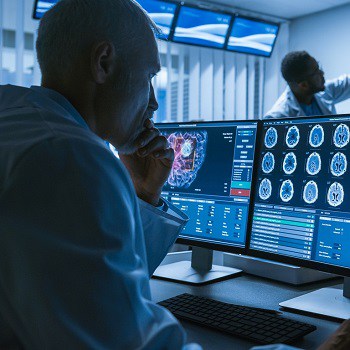
Focused ultrasound uses MRI guidance to target the small area of the brain responsible for tremor. Concentrated sound waves create a tiny, controlled lesion that interrupts the abnormal signals causing the shaking.
How do I find out if I’m eligible?
Your surgeon will determine eligibility during your consultation. You may qualify if you:
- Are 22 years or older with a confirmed diagnosis of essential tremor
- Have tried at least two medications without enough relief or experienced unwanted side effects
- Complete a CT scan of your skull to make sure the bone density and shape allow the ultrasound energy to safely and effectively reach the target
Why do I have to shave my head before the procedure?
Ultrasound energy travels best through water, not air.
A smooth scalp and silicone cap ensure consistent contact so the ultrasound waves can reach the target safely and effectively. Hair can trap air bubbles, which may block or reflect energy, so shaving is important for accuracy and safety.
Am I in the MRI the whole time?
Your treatment table moves in and out of the MRI, and you will only be inside the scanner from your head to your mid-torso.
The longest you will be in the scanner at once is up to 15 minutes to obtain imaging before the procedure begins.
During energy delivery, you are typically in the scanner for 60-120 seconds at a time.
Is it possible the ultrasound waves will miss the target?
This is extremely rare. MRI guidance provides a real-time view of the brain, allowing your doctor to target the treatment area with precision.

Most patients experience immediate, lasting tremor improvement from focused ultrasound. This allows them to live independently and get back to the activities they enjoy.
Throughout the procedure, your team will test you to confirm that tremor improvement is occurring. That lets them fine-tune the treatment as needed.
What if I have a tremor in both hands?
Focused ultrasound is FDA-approved to treat both sides of the brain, one side at a time. If your first treatment is successful and you do not experience significant side effects, you can have the second treatment after at least nine months.
Does insurance cover the procedure?
Medicare covers focused ultrasound under Part B in all 50 states. Most private insurance plans also provide coverage. Regional One Health’s focused ultrasound team will help review your benefits, and you can contact your insurance provider for coverage details.
Learn More
Regional One Health’s focused ultrasound program is led by neurosurgeons Benjamin Carroll, MD; Jonathan Pomeraniec, MD; and Doug Taylor, MD.