

Regional One Health recently hosted leaders from Hospital Wing and Air Evac, which provide air medical evacuation services, for a tour of the hospital.
The group learned about everything Regional One Health has to offer, including trauma, burn, vascular surgery, and other services.
The goal is to build relationships and educate emergency medical services partners in order to improve care and outcomes for patients in the Mid-South.
Regional One Health has unmatched resources and expertise to care for critically injured patients.
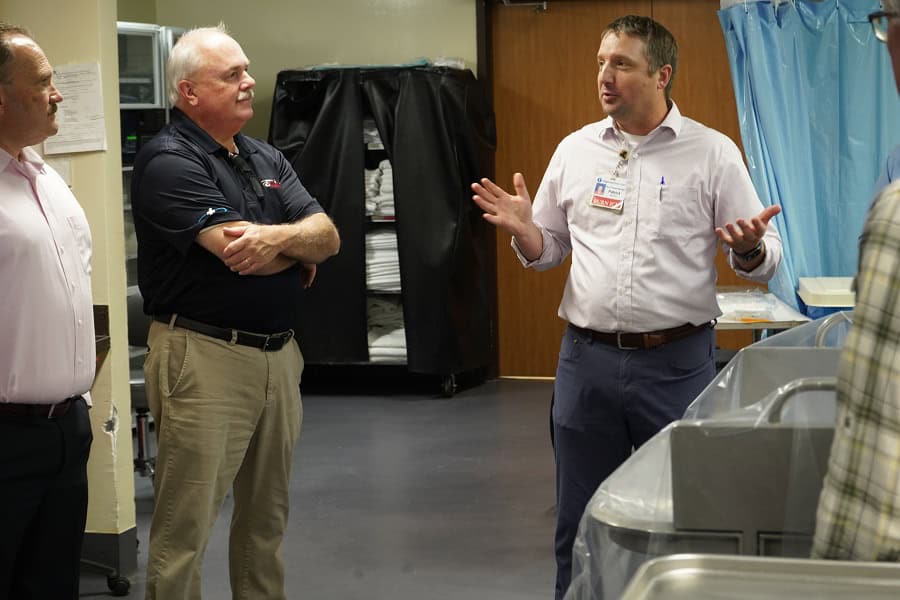
Air evacuation teams toured the Elvis Presley Trauma Center and Firefighters Burn Center, which see patients from all over the Mid-South as the region’s level-one trauma center and full-service burn center.
But in a service area that spans several states and a 150-mile radium of Memphis, they can’t do it alone. They rely on strong partnerships with community hospitals and Emergency Medical Services providers to make sure patients get prompt, high-quality care.
Regional One Health recently hosted a tour for some of those essential partners. Leaders from Hospital Wing and Air Evac, which provide air medical evacuation services through the company Global Medical Response, were onsite to build relationships and learn more about the services Regional One Health offers.
Erica Neisser, Trauma Program Manager, noted, “Building relationships and letting them know about everything we have to offer as a trauma center is important. By working together, not only do we provide better care, we experience better patient outcomes.”
Neisser said Hospital Wing recently came under new ownership, so bringing in regional leadership was an opportunity to showcase Regional One Health to directors and base managers in order to partner successfully on patient care.
“It really opened their eyes to some of the specialized services we have here, and it was a great chance for them to get to know the people behind the scenes,” she explained.
For example, the group toured the Firefighters Burn Center and hear about Regional One Health’s hyperbaric medicine program, led by Dr. Tony Alleman.
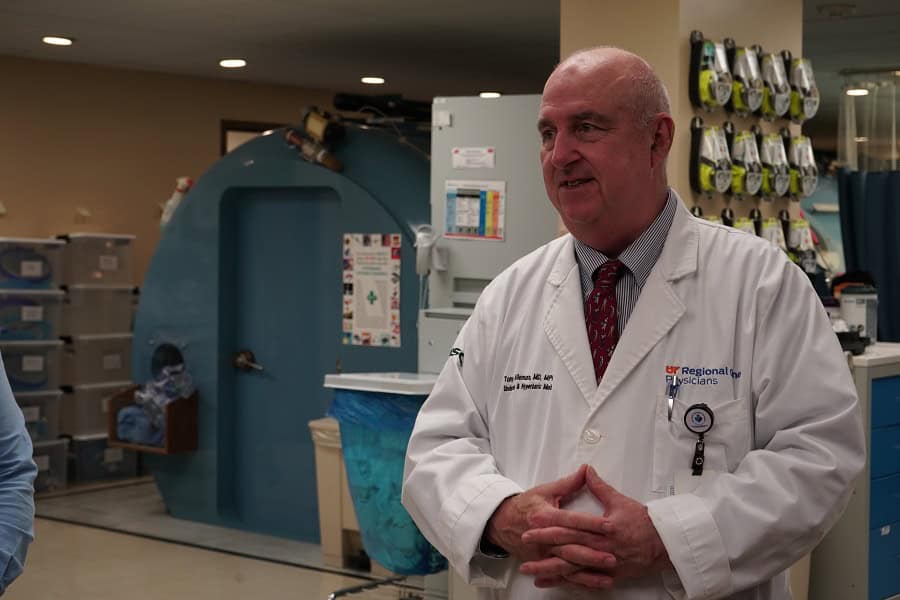
Dr. Tony Alleman highlighted Regional One Health’s unique hyperbaric medicine program. Regional One Health is home to the only multi-place hyperbaric oxygen chamber in the state of Tennessee.
Regional One Health is home to the only multi-place hyperbaric oxygen chamber in Tennessee, which allows the hospital to treat multiple patients simultaneously for conditions such as crush injuries, non-healing wounds and burns, decompression sickness, and more. Hyperbaric oxygen therapy exposes patients to 100% oxygen under pressure, which helps the body heal itself by building new blood vessels.
The tour also featured Dr. Erica Mitchell, division chief of vascular and endovascular surgical services, who showcased Regional One Health’s unique resources for treating vascular trauma.
Regional One Health offers a large team of board certified academic vascular surgeons who are available around-the-clock for trauma care and provide the highest level of vascular expertise in the Mid-South. It is home to Memphis’ only hybrid OR, which integrates the advanced imaging and surgical technology necessary to care for complex injuries.
Trauma center staff also told the Hospital Wing team about new processes that improve workflow and streamline delivery of care.
As one of the busiest trauma centers in the country, the Elvis Presley Trauma Center constantly looks for ways to ensure its resources are available for the patients who need them.
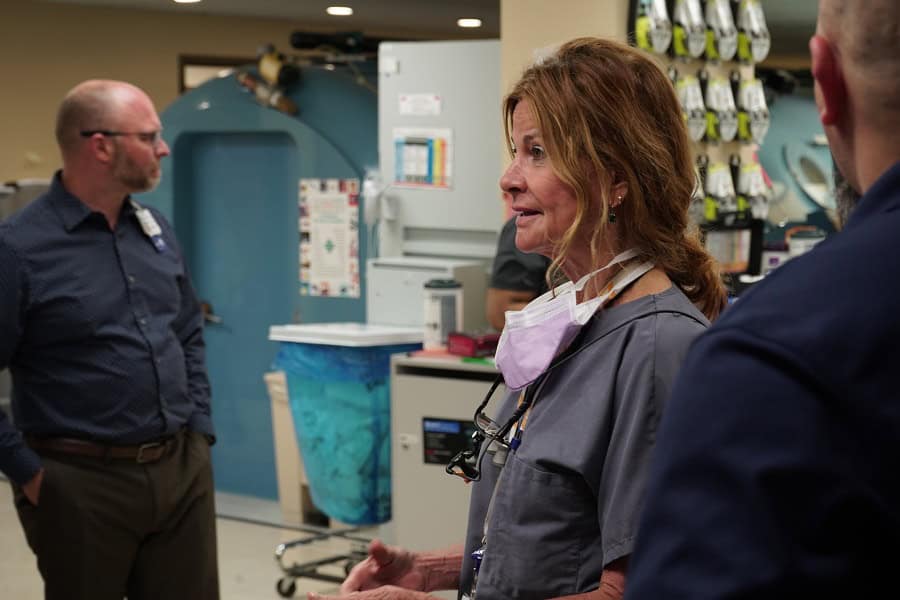
Dr. Erica Mitchell educated the group about Regional One Health’s academic vascular surgery program. The hospital has vascular surgeons available around-the-clock to care for patients who suffer life-threatening vascular trauma.
Neisser said steps were taken over the past several years to protect trauma bed and operating room availability, ensure sufficient blood supply, and decrease EMS offload times.
“If the trauma center doesn’t have capacity, we have to go on critical advisory, which means we have to reach out to EMS partners and let them know we can’t take more patients,” Neisser explained. “We developed a plan to help prevent that from happening and remain open for patients, which is huge for the community.”
The plan was identified as a major strength in the trauma center’s recent verification by the American College of Surgeons.
Neisser, who spent 20 years as a paramedic, said showcasing those processes and services to EMS partners like Hospital Wing keeps everyone on the same page when it matters most.
“When a patient has a traumatic injury, there are a lot of moving parts. Pre-hospital care and hospital care are both essential,” she said. “By bringing in our partners from Hospital Wing, we give them a chance to learn our processes, ask questions, and share valuable insight and ideas.”